
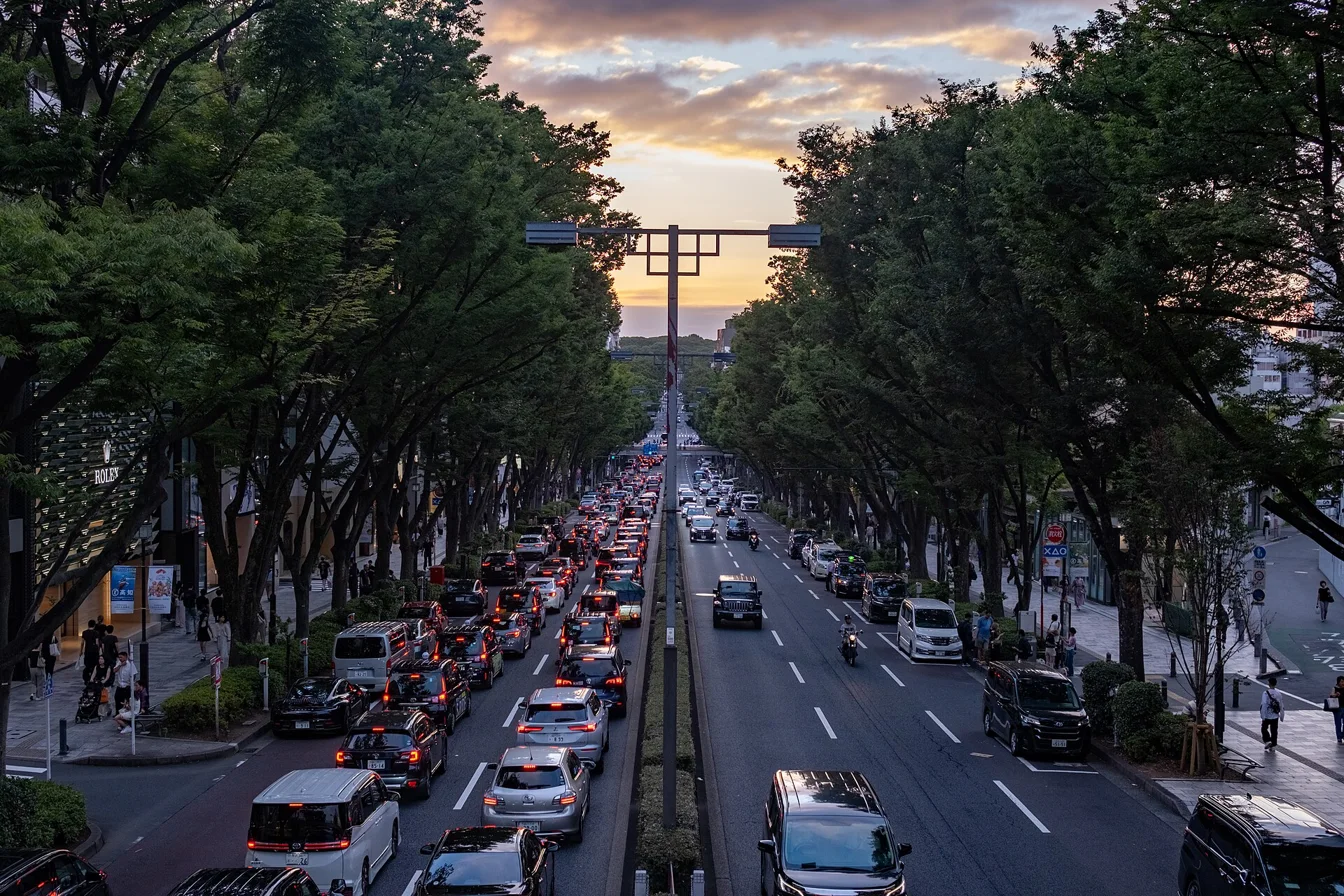

Tokyo pickup options
- Best for
- Airport, station or city starts for the regional drive.
- Trade-off
- A car held through city nights can add parking.
Tokyo
The short answer
Before leaving the office, save the first route, learn the car's controls and find the return entrance. In the city, keep to signs and marked lanes, stop lawfully before changing navigation, and plan parking at the destination.
Driving in Tokyo, Japan is most useful when the car serves a trip beyond the city or a clear local need with parking agreed. For station-based sightseeing, compare public transport first. If driving starts after the Tokyo stay, collect near the point of departure rather than paying to park a car through those city days.
Start with the places the car will serve, not its daily rate. If the stay and planned visits have suitable rail or other public transport, test that plan before hiring. Add the hotel parking, the search for each destination's car entrance and the work of returning the car.
Driving can still fit an exact access need or a route that continues outside Tokyo. Check that the supplied car and parking plans meet that need. A car is not automatically useful merely because it removes the walk to a station.
Split the trip into city days and driving days. You may be able to hire only for the latter. If keeping the rental throughout, ask the stay about parking dimensions, entry times and charges rather than treating its address as a parking promise.
Learn the route while parked at the rental office. Set the first destination and review the next few turns before joining traffic. A passenger can manage navigation while the driver focuses on the road. The driver should stop in a lawful place before using a device.
Read lane arrows and road signs early enough to make a safe choice. If a turn is missed, continue lawfully and let the route change. A sudden lane move is not justified by a navigation direction or an approaching exit.
Japan uses left-side travel. If that is new, practise locating indicators, mirrors and essential controls before departure. Follow the posted current limits and signals. This guide does not substitute a broad default speed for the signs on the road you are using.
Keep the first drive modest. Leaving a garage, finding the correct road lane and learning a new car can consume attention before the longer trip begins. Allow time for those steps rather than putting the first booked stop right away after the pickup appointment.
Locate the actual parking entrance for each planned stop. A destination map pin may lead to the pedestrian door, an inaccessible street or the wrong side of a building. Use the parking operator's current directions and limits.
Read the charging sign at the chosen facility. Identify the time bands, the period any maximum applies to and whether it resets or has exclusions. Do not infer a whole-day price from a prominent short-period figure. Keep a record of the terms if the display is difficult to review later.
Check the car's height and other limits before entering a garage or mechanical parking system. The booked seat class does not settle that fit. If unsure, ask the operator before committing to the entrance.
| Parking task | Check to make |
|---|---|
| Overnight at the stay | Booking, fee, dimensions and access hours |
| A visit in the city | Car entrance, legal parking and walk to the visit |
| A maximum-price sign | Covered period, exclusions and repeat conditions |
| Dropping bags or passengers | A lawful stopping place, not an assumed curbside space |
| Return to a rental garage | Supplier's driving entrance and check route |
Scroll for more →
JAF's rules distinguish parking restrictions from stopping restrictions. Review the road-sign guide if the symbols are new. Other signs and markings at the place still matter.
Choose pickup around the journey change. An airport start may work when driving begins directly after the flight. A city office may work when you first stay in Tokyo. Rail to a later pickup area can make sense when the city part of the drive serves no planned stop.
The Tokyo rental comparison sets out these starting points. Its purpose is to help choose the pickup plan, not to imply that the same car or terms are offered at each office.
## Leave Tokyo for a regional tripWork from the selected branch to the first regional stop. Review the expressway entrance and any toll equipment supplied with the car. Ask how the ETC card is issued, used and settled under that booking. A fitted reader alone does not supply a card or free tolls.
Check current road details for the actual journey. Tokyo's urban roads and later regional roads can have other responsible operators. A notice for one operator is not proof that the entire route is open.
Build rest stops into the plan. If arrival fatigue or new roads make the first stage too much, delay the drive or use another travel plan. The rental pickup time should not dictate an unsafe departure.
Save the car entrance before leaving the office. For example, SIXT's Tokyo Yaesu branch directions identify an underground counter in Yaechika. The desk approach and the route a car must use need separate confirmation.
The Shinjuku guide also explains an office where counter and parking levels differ. Those examples show why returning to a station's main pedestrian entrance is an unsafe guess for a car handoff.
Allow time for the contract's fuel rule and check before the onward train or flight. Ask the office about a delay as soon as one becomes likely. A booking at another nearby branch does not permit you to abandon this car there.
Keep a travel other option if disruption would put the driver under pressure. A later train or revised visit may be preferable to rushing a city return. The supplier must approve a rental extension or return change.
Not necessarily. Compare the visits by public transport and rent only for days that have a clear driving purpose.
No. Signs, markings and the place's current rules govern stopping and parking. Stop lawfully before changing the route.
No. Ask about the card and the booking's settlement method. Add the actual road charges when comparing the journey cost.
Keep the car for days with a useful driving task and lawful parking. Learn the route and controls before departure, and save the return entrance. If city visits work by public transport, compare a later pickup for the regional stage rather than keeping the car parked throughout.
